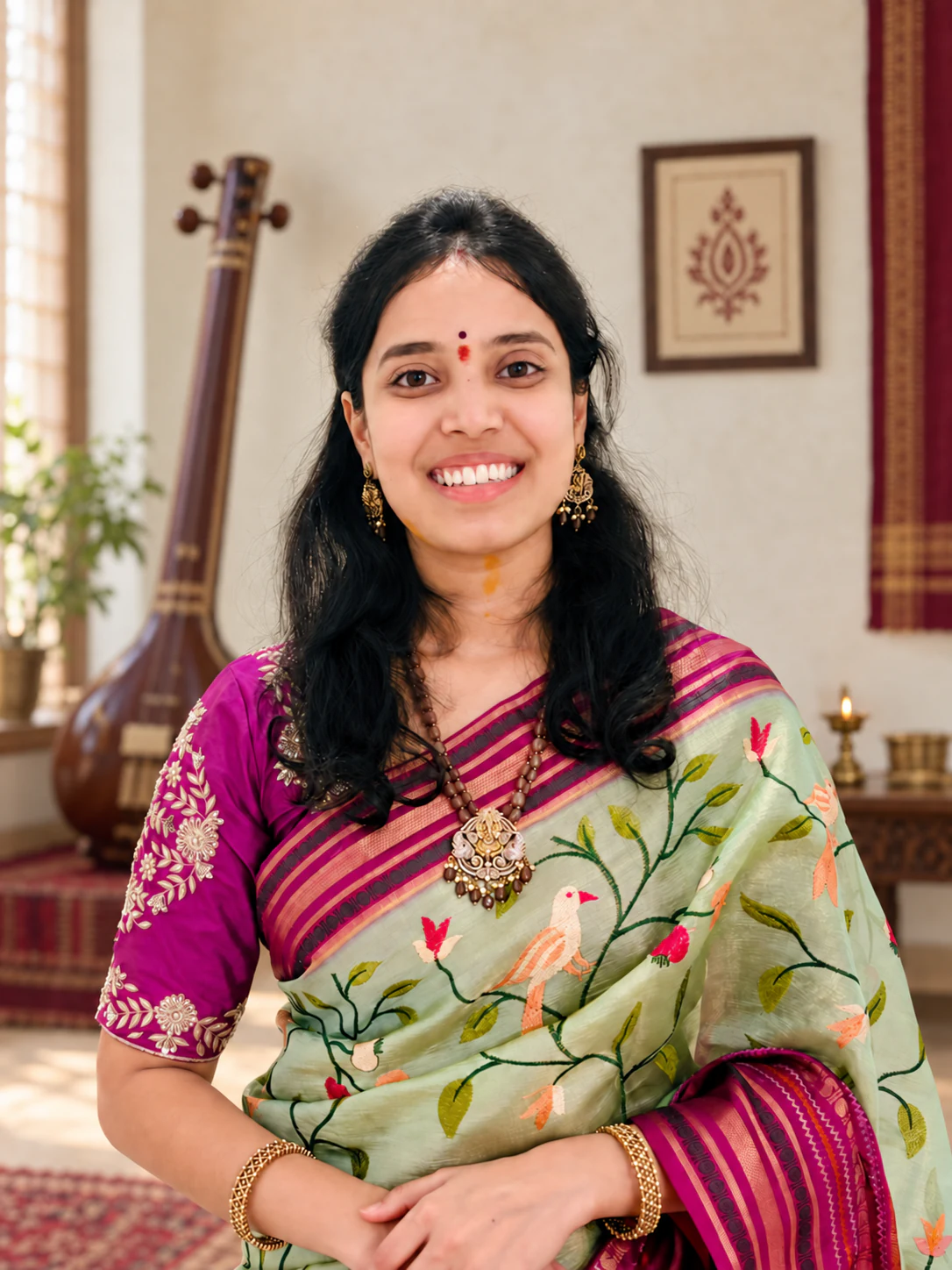
There's a conversation happening in Indian households across America, Canada, the UK, and Australia — in kitchens, in WhatsApp groups, at temple events and school drop-offs. It's not about careers or college or the usual anxieties of immigrant parenting.
It's about something quieter, and perhaps more urgent: how do we give our children their roots?
The Distance Problem
When you grow up in India, your heritage arrives without effort. It's in the air you breathe — the festivals your family celebrates, the shlokas your grandmother recites, the stories your relatives tell. Culture is transmitted through proximity, through repetition, through the thousand small moments of daily life.
When you move abroad, that transmission breaks. Your child grows up American or British or Australian in ways that are wonderful and also, sometimes, quietly heartbreaking. They don't know the prayers. They don't know the stories. They look at you during a puja, waiting for cues, uncertain of words that you know by heart.
This is not failure. It's simply the reality of distance. But it's also something that can be addressed — deliberately, thoughtfully, and with more joy than you might expect.
Why Shlokas Specifically
There are many ways to connect children to Indian culture — language classes, classical dance, music, cooking. All of these are valuable. But shlokas occupy a unique place.
A shloka is not just a prayer or a poem. It's a piece of living memory — a verse that has been passed from teacher to student, parent to child, for thousands of years. When your child chants the Hanuman Chalisa, they are joining a line of voices that stretches back across centuries. That is something no cultural activity class can replicate.
Shlokas also carry meaning — about how to live, how to treat others, what to value. The Guru Doha teaches reverence for teachers. The opening lines of the Hanuman Chalisa teach humility. The Venkateshwara Suprabhatham is an act of devotion so beautiful it has been offered at temple doors for generations.
When we teach children shlokas, we're not giving them a hobby. We're giving them a worldview.
Why Zoom Works Better Than You Think
When I first started teaching online, I was skeptical. How could I replicate the warmth of an in-person class through a screen? How would I hold a 4-year-old's attention?
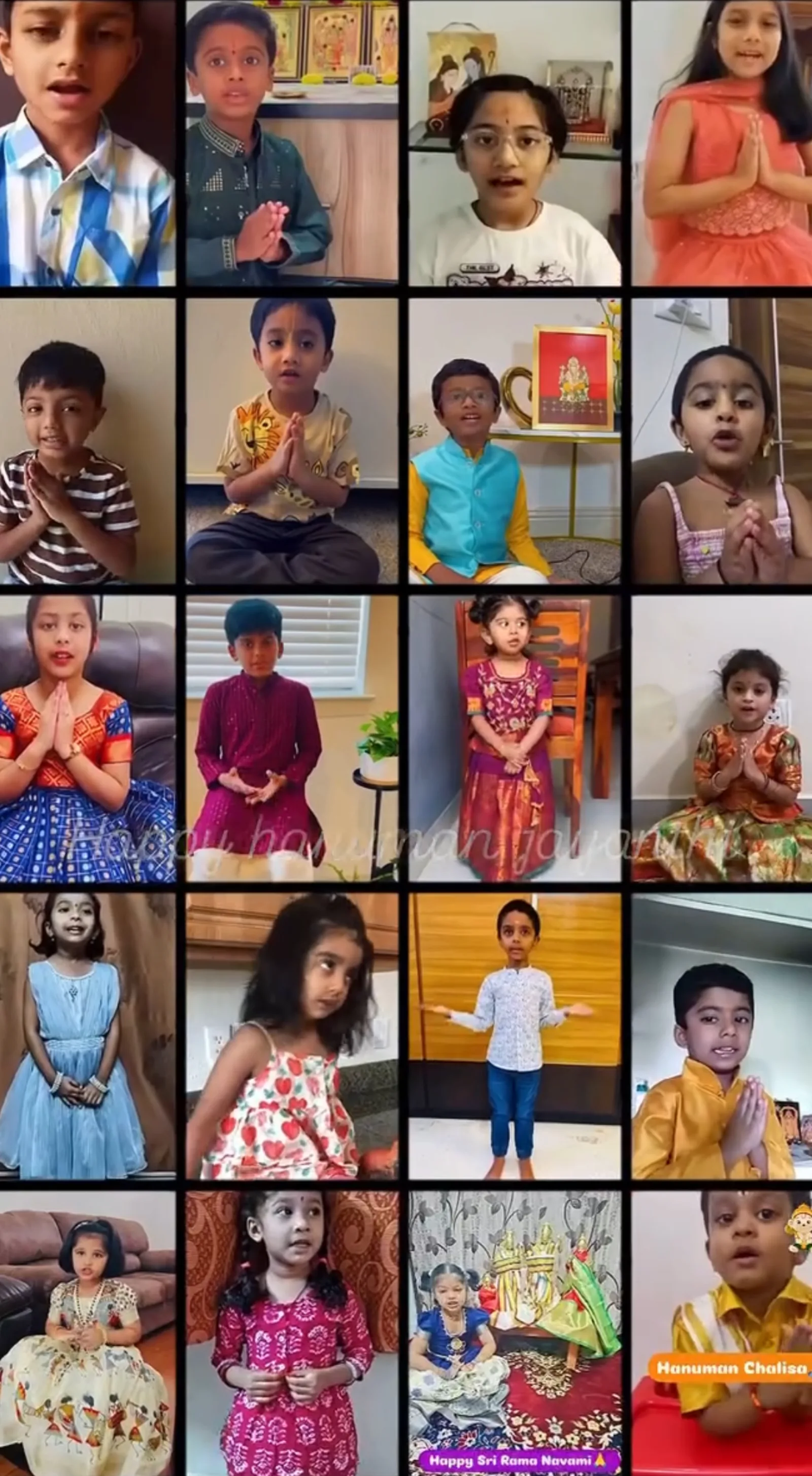
What I discovered surprised me. Online classes have their own magic. Children who might be shy in a physical room are bolder on camera. Parents can sit nearby and learn alongside their children. Families in Houston and Hyderabad and London can be in the same class, chanting the same verses, at the same time.
And the consistency that comes with a scheduled class — same day, same time, same teacher — does something that sporadic temple visits or festival-only exposure cannot. It builds a practice. And practice is how culture actually transmits.
"My daughter chants the shloka every morning now before school. Her focus and confidence have genuinely improved. Lavanya has a rare gift — she makes ancient wisdom feel completely natural for kids." — Padmaja Reddy, Houston
What Parents Tell Me
The moments I remember most aren't the big ones. They're the small ones parents mention almost in passing.
A mum telling me her son was humming the doha while getting ready for school. A dad saying his daughter asked to do "the Hanuman song" before bed. A parent who messaged me saying their child taught the first line to their cousin during a video call with family in India.
Nobody planned any of that. It just happened because something had taken root.
That's really all I'm trying to do — plant something. The rest happens on its own.
Starting is Easier Than You Think
The biggest barrier I hear from parents is not time or money. It's uncertainty. Is my child ready? Will they be interested? What if they resist?
The truth is: children follow the energy of their parents. If you approach this with excitement and warmth — not obligation — they will too. And once they're in a class with other children their age, doing the same thing, the resistance usually dissolves within the first session.
Start small. A workshop. A single class. Come and see what we do together. I've never had a child leave their first class unsmiling.
🕉 Begin the Journey
Weekly shloka classes for kids aged 4–10, live on Zoom. Taught by Lavanya Anthanna. Families across the USA and India.
📚 See Our Classes →