There's a conversation I hear from parents more than any other. It goes something like this: "My child eats the food and loves the festivals. But anything deeper — prayers, shlokas, the actual meaning of things — they switch off. How do I get them interested?"
I understand this completely. And I want to offer something that might be different from what you usually hear: the goal is not to make them interested in "Indian culture." That framing is part of the problem.
The Problem with "Culture" as a Category
When we present Indian traditions as a package called "our culture" — something children are supposed to learn and preserve — we turn it into a duty. And children, especially teenagers, resist duty.
But they don't resist a good story. They don't resist something that makes them feel capable and proud. They don't resist belonging to something meaningful.
The trick is to stop presenting traditions as traditions, and start presenting them as what they actually are: stories, ideas, practices, and ways of seeing the world that happen to be very old and very beautiful.
What Actually Works
1. Start with stories, not practices
Before you teach a child a shloka, tell them why it was written. Before you teach them a festival ritual, tell them the story behind it. The Ramayana is one of the most gripping adventure stories ever told — a prince exiled, a devoted wife taken, an army of monkeys, a flying monkey who set a city on fire with his own tail.
Children who know the story want to know the prayer. Not the other way around.
2. Let them see you do it
Children imitate what they see more than what they're told. If prayer and chanting are part of your daily life — not just something you do on festival days — your children absorb it as normal. Not special, not exotic. Just what our family does.
Even five minutes of chanting in the morning, done consistently, creates a rhythm your child will carry unconsciously.
3. Give them ownership
Ask a child to teach you a shloka they've learned. Ask them to explain what it means. Let them lead the diya lighting at Diwali. Let them choose which prayer to chant.
The moment a child becomes a teacher — even for a moment — their relationship to what they're learning changes entirely.
4. Connect it to their real life
The Saraswati shloka before a test. The Ganesha prayer before something new and scary. The peace mantra when they're anxious. These aren't superstitions — they're anchors. Practices that say: you are not alone in this.
When children see that a shloka actually helps them feel calmer, more focused, more grounded — they stop seeing it as something their parents want them to do. It becomes something they want.
5. Find their community
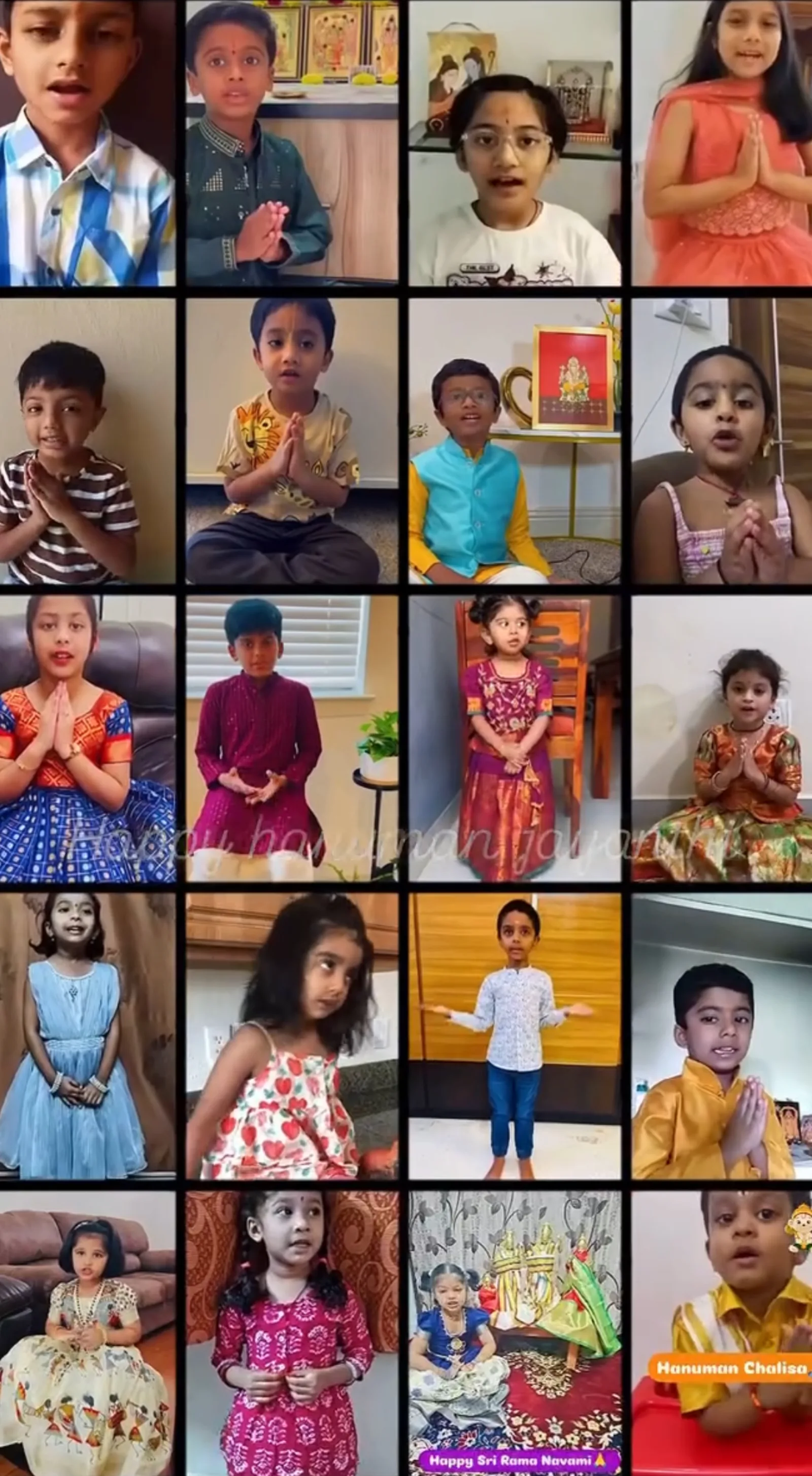
Nothing reinforces identity like peers. A child who learns shlokas alone at home might drift. A child who chants with other children their age — who sees that this is something kids do, not just grandparents — builds a different relationship to their heritage.
This is one of the things I see most clearly in my classes. Children who were reluctant at home become enthusiastic when they're in a room (even a virtual one) with other children doing the same thing.
What Doesn't Work
Forcing. Comparing — "your cousin in India knows all of this already." Making it feel like homework. Connecting it to guilt about forgetting your roots.
Children who are guilted into culture don't stay there. Children who are invited into something beautiful do.
"I was skeptical whether a 6-year-old could sit through a shloka workshop. But my son was completely engaged the entire time." — Vasudha, Dallas
The Long Game
You are not trying to create a child who performs Indian culture on demand. You are trying to plant something that will grow in them for the rest of their lives — a sense of belonging to something ancient and good, a few prayers that come naturally in moments of need, a pride in who they are and where they come from.
That doesn't happen in one conversation or one festival. It happens through consistency, warmth, and — most importantly — your own genuine love for these things.
Children feel what is real. If you approach this with joy, they will too.
🌸 Start the Journey Together
Weekly shloka classes for kids aged 4–10 — live on Zoom, warm and joyful. Come and see what we do together.
📚 See Our Classes →