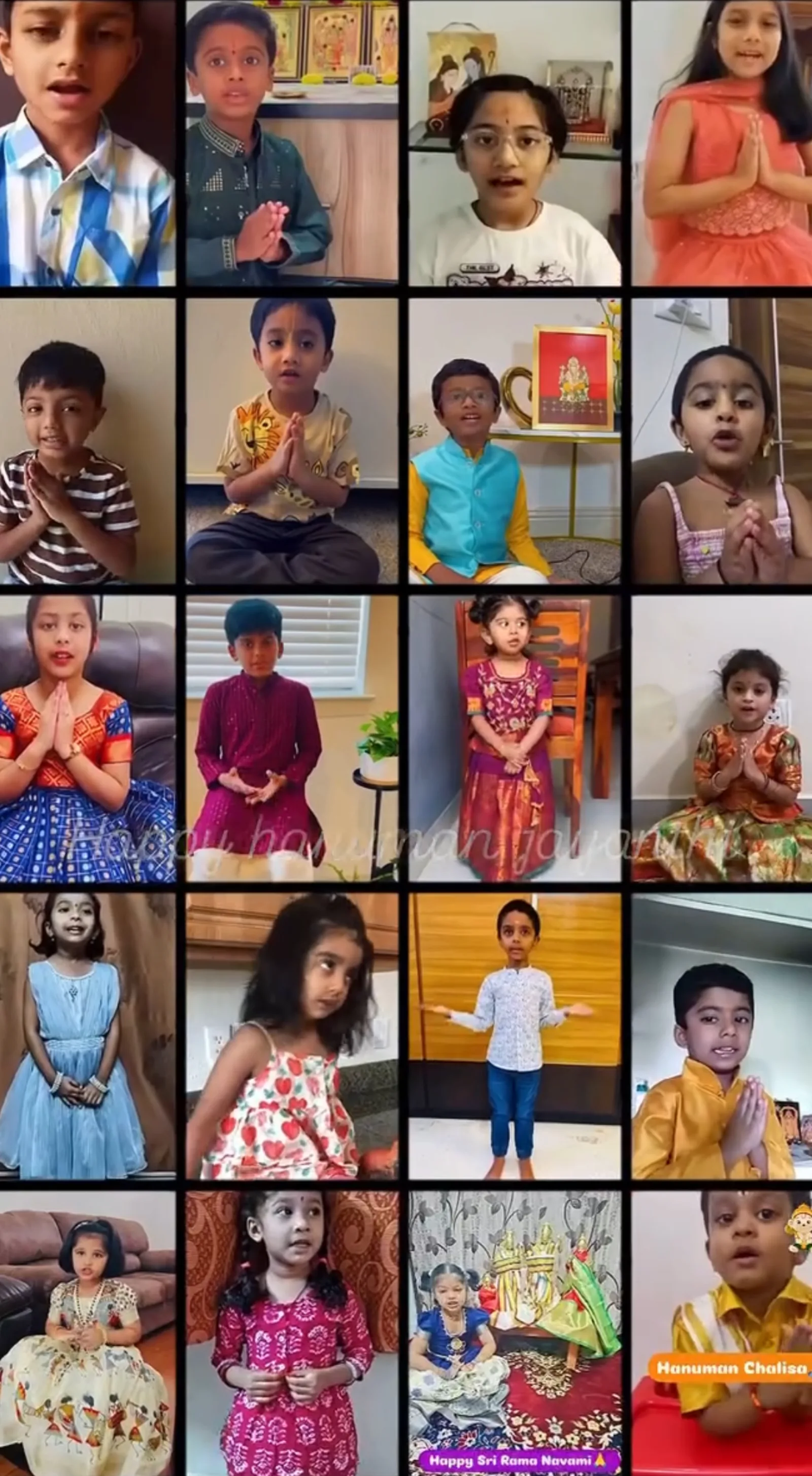
Many children chant the Hanuman Chalisa. Far fewer understand what they are saying.
This is not their fault — or their parents'. The Chalisa was written in Awadhi, an old form of Hindi, by the saint Tulsidas in the 16th century. Even adults who have chanted it their whole lives sometimes pause when asked: what does this line actually mean?
But here's what I've learned from years of teaching: when children understand what they're chanting, something shifts. The words stop being sounds and become meaning. And meaning is what makes a prayer last a lifetime.
Let me walk you through the Hanuman Chalisa — simply, in a way you can share with your child.
What is the Hanuman Chalisa?
The word "Chalisa" means forty — the Hanuman Chalisa has forty verses (chaupais) plus an opening and closing section. Written by Tulsidas, it is a devotional poem in praise of Lord Hanuman — his qualities, his deeds, and the blessings he bestows on those who chant his name with love.
It takes about 7–10 minutes to chant in full. It is one of the most widely recited texts in the world.
The Opening Doha
बरनऊँ रघुवर बिमल जसु जो दायकु फल चारि।।
This is where Tulsidas begins — by honouring his teacher. Before he praises Hanuman, he first cleanses his own mind. The "four fruits" are dharma (righteousness), artha (prosperity), kama (fulfilment), and moksha (liberation).
For children: "Tulsidas is saying — I clean my heart and mind first, like cleaning a mirror, so I can see clearly. Then I begin."
The Main Verses — Key Themes
Who is Hanuman?
The first several verses describe Hanuman's nature and appearance:
He is described as wise, brave, devoted, and radiant. The Chalisa paints a picture of a being who is both enormously powerful and completely humble — using all that power in service of Rama.
What did Hanuman do?
The middle verses describe Hanuman's great deeds — crossing the ocean to find Sita, burning Lanka, carrying the Sanjeevani mountain to save Lakshmana. These are the stories children love most, and the Chalisa tells them in compressed, poetic form.
For children: "Hanuman flew through the night carrying an entire mountain to save Lakshmana's life. Rama was so grateful he hugged him tight."
What blessings does Hanuman give?
The later verses speak of Hanuman's power to protect — to remove fear, sickness, and sorrow from those who call upon him with sincerity.
For children: "When you're scared at night, chant Hanuman's name. He keeps you safe." This one line has comforted generations of frightened children.
The Closing Doha
राम लखन सीता सहित हृदय बसहु सुर भूप।।
The Chalisa ends with an invitation — not a demand, but a gentle request for Hanuman to live in our hearts alongside Rama's entire family. It's a beautiful ending.
Why Understanding Matters
When I teach children, I don't just teach them to recite. I explain each verse in simple words. I tell the story behind it. I ask them questions — why do you think Hanuman carried a whole mountain instead of just picking one herb? (Because he didn't know which herb to pick — so he brought the whole mountain. That's the kind of devotion that leaves no room for failure.)
Children who understand what they're chanting are children who keep chanting. Not because they're told to — but because it means something to them.
🙏 Learn Hanuman Chalisa with Lavanya
Our Thursday Hanuman Chalisa class teaches every verse with meaning. Live on Zoom, kids aged 4–10.
📚 Join Hanuman Chalisa Class →